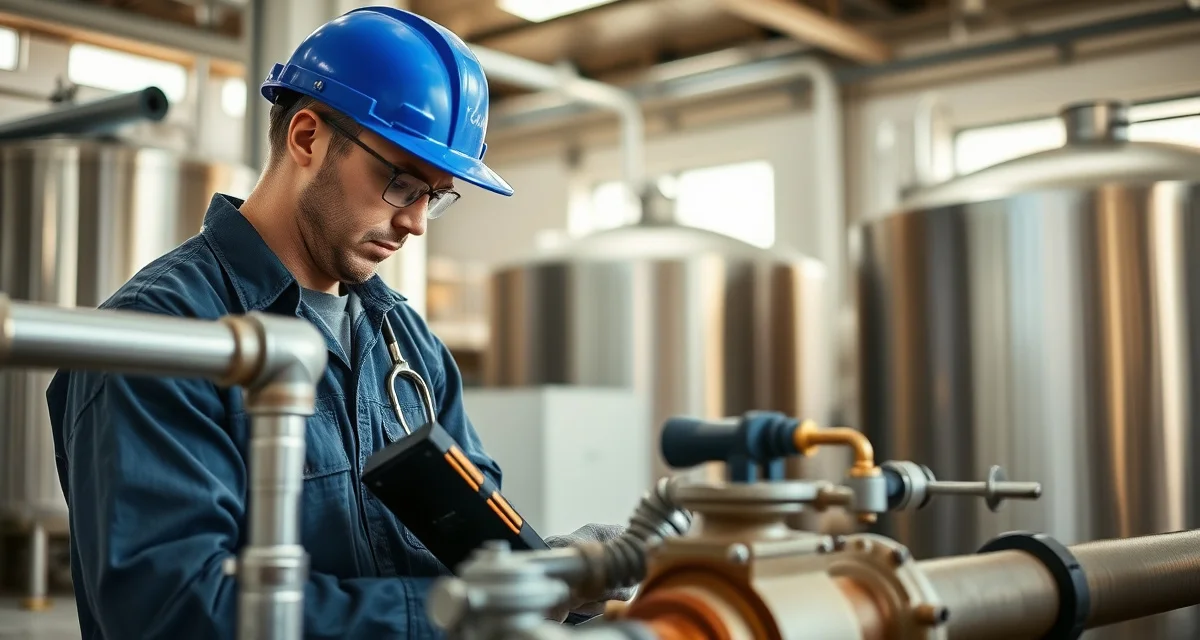
Septic Service for Craft Breweries With Onsite Wastewater
By the SepticMind Editorial Team
Brewery wastewater has BOD concentrations 10-20x higher than residential wastewater, requiring specialized management. Craft brewery violations for septic system overloading carry average fines of $9,600 per incident. These aren't abstract concerns for the thousands of small craft breweries operating on rural or semi-rural properties where public sewer isn't available -- they're the operational reality of running a brewery on an onsite system.
TL;DR
- Breweries facilities have distinct wastewater loading patterns that affect septic system sizing, service frequency, and permit requirements.
- Commercial and institutional properties like breweries typically require more frequent pumping than residential systems due to higher daily usage.
- Some breweries operations generate waste streams (grease, chemicals, or high-volume flow) that require pre-treatment before reaching the septic system.
- Service contracts for breweries provide predictable recurring revenue and are easier to manage with a platform that tracks commercial account schedules.
- Health department inspections for breweries properties may require septic system condition documentation as part of facility licensing.
- Septic companies specializing in breweries service build referral networks with property managers, architects, and health inspectors in that niche.
Understanding what makes brewery wastewater different, what it does to a conventional septic system over time, and how to build a service program that keeps a brewery in compliance requires more than a standard commercial pumping rotation.
What Makes Brewery Wastewater So Aggressive
Brewing produces multiple waste streams that all converge on the wastewater system:
Spent grain and yeast: Residuals from the mashing and fermentation process contain high concentrations of organic material. Even well-strained effluent carries significant BOD loading from dissolved sugars, proteins, and yeast.
Cleaning chemicals: Commercial cleaning-in-place (CIP) systems use caustic and acid chemicals to sanitize brewing vessels, lines, and kegs. These chemicals -- particularly sodium hydroxide and phosphoric acid -- are highly alkaline or acidic and can disrupt the bacterial balance in a septic system.
Spent hops: Hop particulates from the whirlpool and dry-hopping process end up in wastewater and contribute to solids loading in the septic tank.
Glycol: Breweries using glycol-based chilling systems may have glycol carryover in their wastewater, which has its own treatment challenges.
High temperature: Brewing wastewater is often hot, which can kill septic bacteria when large volumes enter the tank rapidly.
The cumulative effect is a waste stream that a conventional residential or light commercial septic system cannot handle at brewing production volumes. Systems that start the brewery's life as adequate slowly degrade under the consistent stress of high-BOD loading.
BOD Loading and Drainfield Failure
Biological Oxygen Demand (BOD) is the measure of how much oxygen is required to biologically break down organic material in wastewater. High BOD means high organic loading -- and when organic loading exceeds what the soil-based treatment system can process, the drainfield becomes saturated with organic material, the soil's absorption capacity is destroyed, and the system fails.
For a brewery, the BOD loading problem is seasonal and operational:
- Brewing days produce dramatically higher BOD than non-brewing days
- Canning and bottling lines generate rinse water with high residual BOD
- Taproom restroom and kitchen use adds a moderate additional load on top of production waste
- Cleaning day chemical surges can dramatically disrupt tank bacterial populations
A conventional septic system serving a brewery needs to be sized not for average BOD loading but for peak BOD days -- which are the brewing days. If it was sized for average residential or commercial use without accounting for brewing production, it's undersized.
Pretreatment Options for Brewery Wastewater
Because conventional septic systems often can't handle raw brewery wastewater at production volumes, many breweries need some form of pretreatment before wastewater enters the septic system:
Equalization tanks: Buffer tanks that hold wastewater and release it at a controlled rate, smoothing out the surge of high-BOD waste from a brewing day so the septic system receives a more even flow.
Dissolved air flotation (DAF) systems: Remove suspended solids and fats/oils before wastewater reaches the septic tank, reducing BOD loading.
Aerobic bioreactors: For larger brewing operations, a dedicated aerobic treatment system before the septic drainfield can reduce BOD to levels the soil-based system can handle.
pH adjustment: Neutralizing cleaning chemical surges with pH adjustment before they enter the septic tank protects bacterial populations.
Not every small brewery needs an engineered pretreatment system -- the right solution depends on production volume, existing system size, and local regulatory requirements. But ignoring the pretreatment question entirely is what leads to drainfield failures and $9,600 violations.
Service Intervals for Brewery Accounts
Given the BOD loading and chemical challenges, brewery septic systems require significantly more frequent service than standard commercial accounts:
- Nano to small brewery (under 1,000 barrels/year, active taproom): Quarterly pumping minimum
- Mid-size craft brewery (1,000-5,000 barrels/year): Monthly to quarterly depending on system size
- Taproom only without production: Semi-annual to quarterly based on traffic volume
The production schedule matters as much as the volume. A brewery that brews five days a week creates sustained high-BOD loading. A brewery that brews once a week creates spikes but more recovery time between them.
Service visits at brewery accounts should include condition assessment beyond the standard pump-out. Watch for signs of drainfield stress (wet spots, surfacing effluent near the field) and document them in the account record as early warning indicators.
Compliance Documentation for Craft Breweries
Craft breweries with onsite wastewater are increasingly on the radar of state environmental agencies. The growth of the industry has meant more small breweries operating on systems that weren't designed for their actual production volumes.
Documentation requirements vary by state, but commonly include:
- Annual pump-out records with dates, volumes, and disposal manifests
- Proof of any required pretreatment system maintenance
- Records of any system inspection or assessment
- Notification to the health department when system issues occur
For the septic service for restaurants category, many of the same documentation requirements apply since breweries with taprooms are effectively food service operations from a health department perspective. The alternative septic system management software page is relevant for breweries that have engineered treatment systems rather than conventional septic.
Working With New Brewery Accounts
When a craft brewery approaches you for service, get complete information before quoting:
- Current production volume in barrels per month
- Number of brewing days per week
- Type of cleaning system used
- Current system size (tank volume, drainfield area)
- System age and any known issues
- What permits are in place
This information tells you whether the current system is adequately sized for the actual production volume, what service interval is appropriate, and whether there are pretreatment concerns you need to flag.
Don't accept a brewery account without understanding what you're agreeing to service. A brewery on an undersized conventional system with no pretreatment and high production volume is not a standard pumping account -- it's a compliance management challenge that requires a different kind of service agreement.
Get Started with SepticMind
Managing service contracts for breweries properties is easier with a platform built for the septic trade. SepticMind tracks commercial service schedules, documents every inspection visit, and keeps your compliance records organized by property. See how it handles your commercial account portfolio.
Frequently Asked Questions
What septic system considerations apply to craft breweries with onsite wastewater?
The primary concern is BOD loading -- brewery wastewater carries 10-20x the organic load of residential wastewater, which can overwhelm conventional septic systems. Cleaning chemical surges from CIP systems disrupt septic bacteria. High-volume brewing on an undersized conventional system leads to progressive drainfield degradation and eventual failure. Most small to mid-size breweries need either a system sized specifically for brewing wastewater volumes or some form of pretreatment (equalization tanks, DAF systems, or pH adjustment) before wastewater enters the conventional septic component. Local environmental agencies in states with active craft brewing industries are increasing scrutiny of brewery wastewater management.
How often should a craft brewery's septic or pretreatment system be serviced?
Quarterly is the minimum for an active craft brewery. Monthly service is appropriate for mid-size operations with consistent production schedules. The taproom component of a brewery -- dining and restroom use -- adds to the production wastewater load and should be factored into the service interval. If the brewery has a pretreatment system (equalization tank, DAF system), that system may need more frequent attention than the septic tank itself. Service intervals should be calibrated to actual production volume and tank fill rate, not set at a generic commercial interval.
Does SepticMind track high-strength wastewater load considerations for commercial accounts?
Yes. SepticMind's brewery account type includes documentation fields for high-strength wastewater load characteristics, production volume, and pretreatment system notes. Service intervals are set to reflect actual brewery use patterns rather than standard commercial intervals. Account notes capture cleaning chemical schedules, brewing day frequency, and any pretreatment system maintenance requirements. The account record becomes a comprehensive picture of the brewery's wastewater management program that supports both your service planning and the customer's compliance documentation when regulators ask for records.
How often should a septic system serving a breweries property be inspected?
Septic systems at breweries properties should be inspected at least annually and pumped more frequently than residential systems, since commercial-scale daily water usage accelerates sludge and grease accumulation. The exact frequency depends on the specific activities at the facility, peak occupancy, any food service or chemical use on-site, and local regulatory requirements. A service provider familiar with breweries operations can recommend an appropriate inspection and pumping schedule based on the system's actual usage profile.
What septic system issues are most common at breweries properties?
The most common septic problems at breweries properties are rapid sludge accumulation from high occupancy, grease trap failure if food service is involved, hydraulic overloading during peak-use periods, and non-biodegradable waste disposal from cleaning or maintenance activities. Regular inspection and a service contract with clear maintenance intervals are the most effective ways to catch these problems before they cause system failure or regulatory violations.
Try These Free Tools
Sources
- National Onsite Wastewater Recycling Association (NOWRA)
- US EPA Office of Wastewater Management
- NSF International
- Water Environment Federation
- National Environmental Services Center (NESC)