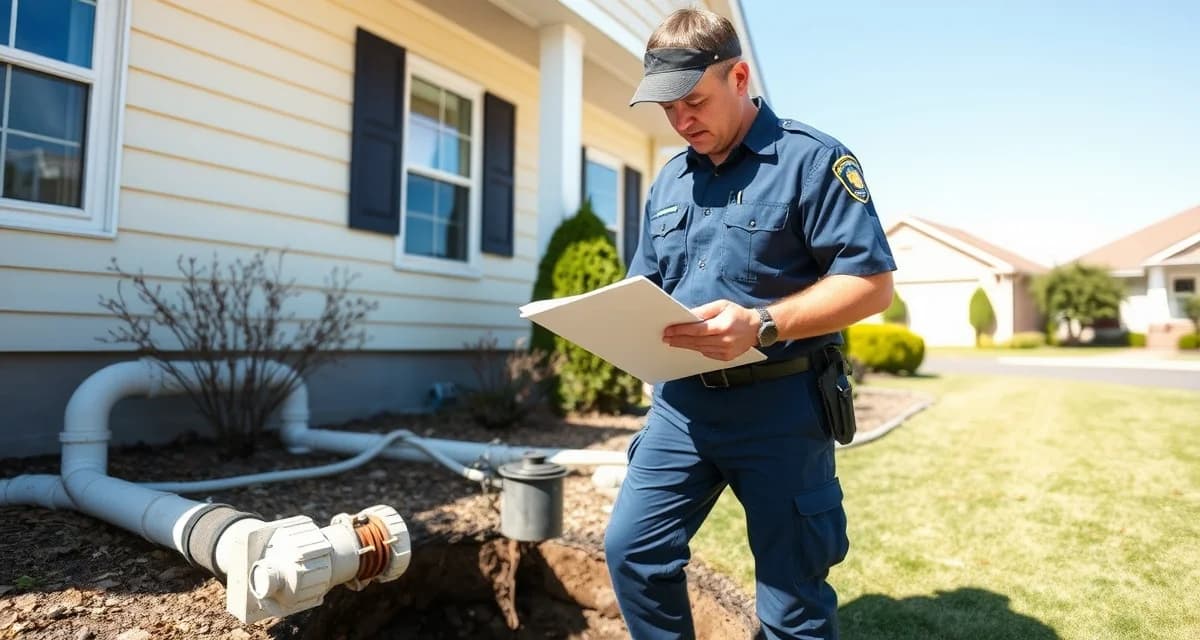
Septic Inspection Workflow for Real Estate Transactions: From Order to Delivery
By the SepticMind Editorial Team
A complete real estate septic inspection involves nine distinct steps from order to lender acceptance. Miss any one of them and you're looking at a closing delay, an unhappy agent, or a rejected report.
TL;DR
- Septic inspections require state-specific report formats that must be completed correctly before they are accepted by regulators, lenders, or buyers.
- Photo documentation with timestamps and GPS coordinates is the minimum standard for defensible inspection reports.
- Real estate inspection reports in most states must be filed with the county health department within a specified timeframe.
- Inspector credentials must be current and visible on every submitted report; expired credentials are grounds for report rejection.
- Digital inspection tools reduce report completion time from hours to minutes and eliminate transcription errors.
- Consistent documentation quality across all technicians protects company reputation in the real estate inspection market.
Missed steps in the real estate inspection workflow delay closings and damage agent relationships. And in the real estate inspection market, agent relationships are everything. Lose one agent's confidence and you lose a pipeline of referrals that can represent a notable portion of your inspection volume.
Here's the workflow, step by step.
Step 1: Receiving and Confirming the Order
When an agent or buyer contacts you for a real estate inspection, the first step is confirming all the details before scheduling anything.
Confirm at order intake:
- Property address and county (this determines permit and format requirements)
- Buyer's name and contact information
- Agent's name, brokerage, and contact information
- Lender name and contact information (if known)
- Any lender-specific format requirements
- Transaction timeline and closing date
- Who is responsible for payment and how
Get this in writing, even if it's an email confirmation. The property address and lender information are particularly important because they determine what you're required to produce, and discovering a format requirement after the inspection is already done creates problems.
Step 2: Scheduling With All Three Parties
Real estate inspection scheduling involves coordination between the buyer, seller, and sometimes the real estate agent. The seller controls access. The buyer (and sometimes their agent) wants to be present. You need a time that works for everyone.
How do I coordinate scheduling between a real estate agent, buyer, and seller for a septic inspection? The practical approach is to get two or three available windows from the seller's agent, present them to the buyer's agent, and confirm whichever works. Don't triangulate through too many parties. Go agent-to-agent and confirm directly.
Confirm the appointment in writing with both agents, including:
- Exact date and time
- Who needs to provide access
- Your contact information
- What the inspection process involves
Send a reminder 24 hours before.
Step 3: Pre-Inspection Permit and Credential Verification
Before you arrive on site, confirm that you hold the required credential for this county and this inspection type. If you're operating across multiple counties or states, credential requirements vary and the credentials need to be verified at the job level, not assumed from your general license.
Also confirm whether the county or any local regulation requires the tank to be pumped as part of the inspection process. Some states and lenders require pumping as a mandatory component of the real estate inspection. If it's required and you're not equipped to pump, arrange a pumping company to be on site with you.
Step 4: The Site Visit
Arrive on time. The real estate inspection is a coordinated event with multiple parties involved and a timeline pressure no one needs to explain to you.
During the inspection, follow your full component checklist. Digital septic inspection forms ensure you cover every required component, capture photos systematically, and record condition ratings in the format your report template requires.
Take more photos than you think you need. You can't go back.
For combination pump-and-inspect jobs, coordinate the pumping and inspection activities so the interior inspection happens while the tank is empty.
Step 5: On-Site Communication With Parties Present
The buyer is usually present and wants to know what you're finding as you find it. Keep the on-site conversation factual and observational. "I can see the outlet baffle shows some deterioration. I'll document this in the report and include photos." Avoid making definitive conclusions before you've completed the full inspection.
Don't tell the buyer verbally whether they passed or failed before you've finished the inspection and reviewed all findings. Your verbal assessment in the driveway, before the formal report is written, can create confusion if the report says something different.
Step 6: Determining the Pass/Fail Finding
After completing the on-site inspection and reviewing all findings, make your determination: Pass, Conditional Pass, or Fail. This should be a deliberate decision based on all observed conditions, not a snap judgment made on site before you've reviewed everything.
For borderline cases, review the condition documentation, your photos, and the applicable state standard before finalizing the determination.
Step 7: Report Generation
Generate the report using the required format for the state and lender. What is the typical turnaround time lenders expect for a septic inspection report? Most agents and lenders expect the report same-day or within 24 hours of the inspection. Inspectors who deliver within 2 hours of site visit get four times more referrals than next-day reporters.
SepticMind's inspection workflow generates a complete report from field-entered data when you mark the inspection complete. Photos are embedded, condition ratings populate the findings, and the report is formatted for the required output type.
Step 8: Quality Review Before Sending
Before sending any report, review it for:
- All required fields completed
- Pass/fail determination clearly stated
- All major components documented
- Photos present for each documented condition
- Inspector name, credential number, and inspection date present
- Correct format for the receiving lender
A report that comes back for corrections is a delay to the transaction. A rejected report is worse. Take five minutes to review before sending.
Step 9: Delivery to All Required Recipients
Confirm who needs the report:
- Buyer's agent
- Listing agent (in some cases)
- Lender or underwriter
- County health department (in states that require inspection report filing)
- Buyer directly (in some cases)
Can SepticMind send inspection reports directly to the lender without me forwarding manually? Yes. SepticMind's report delivery system can send the completed report to designated recipients automatically when the report is marked complete. This eliminates the forwarding step and ensures delivery happens immediately rather than when you get around to it.
Confirm receipt for lender deliveries in particular. Get a confirmation email or message showing the lender received the report in the required format.
Following Up After the Report
For pass reports, a quick follow-up with the agent ("Just confirmed delivery of the inspection report. Let me know if the lender needs anything additional") reinforces your professionalism.
For fail or conditional pass reports, expect follow-up questions from the buyer or their agent. Have your documentation ready to explain the finding in plain language.
If the buyer proceeds with the purchase and a conditional pass requires follow-up inspection, confirm that follow-up scheduling with the agent before the transaction closes.
Get Started with SepticMind
Inspection work is the highest-visibility service in the septic trade, and your documentation quality directly affects your reputation with real estate agents, lenders, and county officials. SepticMind generates state-formatted inspection reports in the field with photo documentation attached. See how it supports your inspection workflow.
Frequently Asked Questions
How do I coordinate scheduling between a real estate agent, buyer, and seller for a septic inspection?
Work agent-to-agent rather than through the buyer directly. Contact the listing agent to get available access windows, then present those to the buyer's agent and confirm. Avoid triangulating through too many parties, as this slows down scheduling notably. Confirm the final appointment in writing to both agents with date, time, access instructions, and your contact information. Send a reminder the day before.
What is the typical turnaround time lenders expect for a septic inspection report?
Most real estate agents and lenders expect a completed inspection report same-day, and ideally within 2-4 hours of the site visit. Inspectors who deliver reports within 2 hours of completing the inspection receive substantially more referrals from agents than those who deliver the following day. In time-sensitive transactions, faster report delivery can be the deciding factor in whether an inspector gets repeat business from a particular agent or brokerage.
Does SepticMind have a real estate inspection-specific job type with the correct workflow?
Yes. SepticMind includes a real estate inspection job type that triggers the full workflow from scheduling through lender delivery. This includes the appropriate inspection checklist, format requirements for common lender types, photo documentation prompts, the pass/fail determination field, and automated report delivery to designated recipients. The system can send the completed report directly to the lender, buyer's agent, and listing agent without the inspector manually forwarding it.
What is the difference between a septic inspection and a septic pump-out?
A pump-out removes accumulated sludge and scum from the tank. An inspection evaluates the condition of all accessible system components: tank structure, baffles, distribution box, drainfield, and in some cases the outlet line. A real estate or regulatory inspection produces a written report in the state-required format with findings and a pass/conditional pass/fail determination. Many inspection visits include a pump-out as part of the service, but the pump-out alone is not the inspection.
Can inspection reports be submitted electronically to the county?
Yes, most counties and state agencies accept electronic inspection report submissions and many now prefer or require them. The report must be in the state-required format and include all required fields, the inspector's credentials, and any required signatures or attestations. Purpose-built inspection software generates the report in the correct state format and can submit it electronically directly from the field.
Try These Free Tools
Sources
- National Onsite Wastewater Recycling Association (NOWRA)
- US EPA Office of Wastewater Management
- NSF International
- American Society of Home Inspectors (ASHI)
- Water Environment Federation