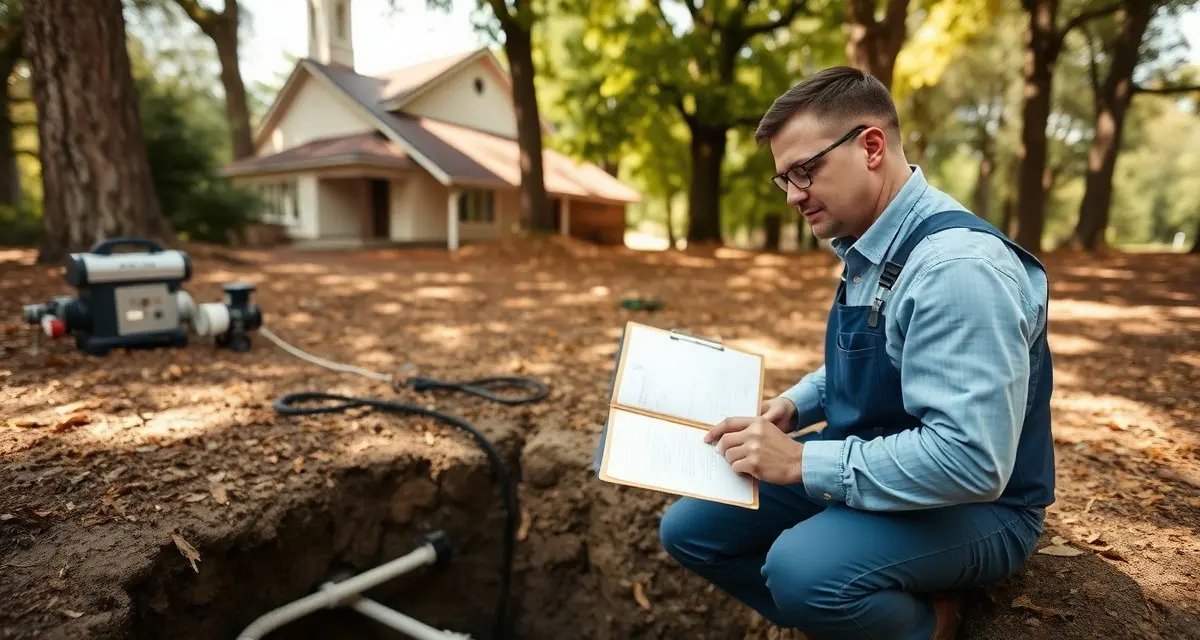
Septic Inspections for Religious Properties: Unique Considerations
By the SepticMind Editorial Team
Religious organizations that defer septic maintenance face compliance actions at 3x the rate of proactive operators. Religious properties sometimes resist septic service reminders -- documenting condition protects inspectors from liability. Inspectors with clear documentation of condition protect themselves when religious organizations defer recommended service.
TL;DR
- Septic inspections require state-specific report formats that must be completed correctly before they are accepted by regulators, lenders, or buyers.
- Photo documentation with timestamps and GPS coordinates is the minimum standard for defensible inspection reports.
- Real estate inspection reports in most states must be filed with the county health department within a specified timeframe.
- Inspector credentials must be current and visible on every submitted report; expired credentials are grounds for report rejection.
- Digital inspection tools reduce report completion time from hours to minutes and eliminate transcription errors.
- Consistent documentation quality across all technicians protects company reputation in the real estate inspection market.
This guide addresses the specific considerations that arise when inspecting septic systems at churches, synagogues, mosques, and other religious properties.
Ownership Structure Challenges
Religious properties have ownership structures that differ from standard residential or commercial properties in ways that affect the inspection process:
Who holds the property: Religious properties are typically owned by the religious organization (a corporation, association, or trust), not by an individual. The party who orders the inspection may be a facilities committee member, a trustee, a pastor, or an administrator with varying levels of authority to authorize repair spending.
Decision-making timelines: Significant expenditures at religious organizations often require board or congregation approval. This creates a longer timeline between inspection findings and authorization of recommended repairs. An inspection finding a $15,000 drainfield repair goes to a church council before it goes to a contractor.
Turnover in leadership: Volunteer-led religious organizations experience leadership turnover that can affect institutional memory about deferred maintenance. A new facilities committee may not know that the previous committee was told the drainfield had concerns.
Budget constraints: Many small to mid-size religious organizations operate on tight budgets where deferred maintenance is a survival strategy rather than neglect. This doesn't make the deferred maintenance less of a problem -- it makes your documentation more important.
Occupancy Patterns and Septic Demand
Religious property occupancy is distinctive in ways that affect both service intervals and inspection interpretation:
Sunday-concentrated use: Most Protestant and Catholic churches see peak septic use concentrated on Sunday morning with minimal use on weekdays. The system recovers for six days between heavy-use periods.
Variable event use: Many religious properties are also community gathering places hosting funerals, weddings, holiday services, community suppers, and youth programs. These events create load spikes above the regular worship pattern.
Seasonal variations: Summer vacation attendance reduces use during the highest-outdoor-temperature period. Holiday season brings maximum attendance. These swings affect when systems are most stressed.
Hall rental (see separate guide): Churches that rent their facilities create commercial-event-level septic demands on top of regular worship patterns. Assess rental activity when establishing service intervals for churches.
When Religious Organizations Defer Recommended Service
This is where religious property inspections create a specific professional challenge. Some religious organizations will:
- Receive a recommendation for service or repair
- Thank you for the inspection
- Defer the recommendation indefinitely due to budget constraints
When a religious organization defers a recommendation that has genuine system health implications, your documentation of that recommendation becomes your professional protection. If the system fails two years later and there's a question about when the problem was identified, your inspection report -- clearly showing the concern identified and the recommendation made -- demonstrates that you fulfilled your professional obligation.
Documentation practices for deferred recommendations:
When a recommendation is made that you have reason to believe will be deferred:
- Write the recommendation with specific language about the nature and severity of the concern
- Include an estimated timeframe for when the deferral creates increased risk
- Deliver the report in a format that creates a dated record (email delivery with read receipt, or signed acknowledgment at delivery)
- Consider a follow-up note at 90 days if the concern was significant
This isn't about creating liability for the religious organization -- it's about protecting yourself and creating a clear record that the concern was communicated.
The Tax-Exempt Property Dimension
Religious properties are typically tax-exempt, which affects their permit and compliance relationship with local governments in some jurisdictions. In most states, tax exemption doesn't affect the property's obligation to maintain compliant septic systems -- but it can affect the history of enforcement because local governments are sometimes reluctant to pursue enforcement against religious properties.
The practical effect for inspectors: you may encounter religious properties where compliance issues have persisted longer than they would at a comparable commercial property because enforcement was softer. This doesn't change your reporting obligations -- you document what you find regardless of the property's tax status.
Working With Religious Property Decision-Makers
The relationship with a religious property's facilities contact works best when you understand their decision-making context:
- Recommendations framed in terms of stewardship (protecting the organization's property) often resonate better than framing around regulatory compliance
- Providing cost-range estimates for recommended repairs helps the organization budget appropriately
- Being willing to speak briefly to a board or committee about your findings, rather than only delivering a written report, can move deferred recommendations to action
These aren't unusual accommodations -- they're the practical realities of serving institutional clients with collective decision-making processes.
Documentation and the Septic Inspection Report Software Framework
Clear, professional inspection reports with dated delivery and photo documentation are your primary protection when recommendations are deferred. The septic company liability protection resource covers the broader liability management context for inspection work.
Get Started with SepticMind
Inspection work is the highest-visibility service in the septic trade, and your documentation quality directly affects your reputation with real estate agents, lenders, and county officials. SepticMind generates state-formatted inspection reports in the field with photo documentation attached. See how it supports your inspection workflow.
Frequently Asked Questions
What unique considerations apply when inspecting septic systems at religious properties?
Religious properties present three specific considerations: ownership by collective entities (boards, trustees, congregations) with longer decision timelines for repair authorization; variable occupancy from Sunday worship focus plus event use; and a pattern of deferring maintenance recommendations when budget constraints are significant. Inspectors need to document recommendations clearly and with specific language about severity, since deferred recommendations at religious properties are common. The inspection report's clarity and dated delivery become your professional protection if the deferred concern eventually leads to system failure.
How do I document deferred maintenance recommendations for a religious property owner?
Write the recommendation with specific language: what the concern is, what it means for system function, and what the likely consequence of continued deferral is. Deliver the report in a format that creates a dated record -- email with read receipt is reliable. Follow up if the concern was significant. If you speak with the facilities committee or board, document that conversation in your file notes. "Condition noted in report, reviewed with church council on [date], deferred pending budget approval" is a meaningful addition to the file. Your goal is a clear record that the concern was identified, communicated, and that the decision to defer was the client's, not yours.
Can SepticMind track a pattern of deferred service for specific accounts?
Yes. SepticMind's account records maintain the full service and inspection history, including recommendations noted in inspection reports and any follow-up communications. For religious property accounts with a history of deferred recommendations, the account history makes the pattern visible at any future service call. When a new inspection is scheduled at a church that deferred recommendations in a prior report, the technician can see that context before arriving. The system also supports reminders at defined intervals after recommendations are made, so that follow-up communication with the client is structured rather than relying on the inspector to remember.
What is the difference between a septic inspection and a septic pump-out?
A pump-out removes accumulated sludge and scum from the tank. An inspection evaluates the condition of all accessible system components: tank structure, baffles, distribution box, drainfield, and in some cases the outlet line. A real estate or regulatory inspection produces a written report in the state-required format with findings and a pass/conditional pass/fail determination. Many inspection visits include a pump-out as part of the service, but the pump-out alone is not the inspection.
Can inspection reports be submitted electronically to the county?
Yes, most counties and state agencies accept electronic inspection report submissions and many now prefer or require them. The report must be in the state-required format and include all required fields, the inspector's credentials, and any required signatures or attestations. Purpose-built inspection software generates the report in the correct state format and can submit it electronically directly from the field.
Try These Free Tools
Sources
- National Onsite Wastewater Recycling Association (NOWRA)
- US EPA Office of Wastewater Management
- NSF International
- American Society of Home Inspectors (ASHI)
- Water Environment Federation