Septic Company Multi-Location Management: Running Multiple Markets
By the SepticMind Editorial Team
Multi-location septic companies using separate tools per location lose coordination and compliance visibility. That's the root problem for most companies that grow into a second or third market and find themselves managing each location as if it were a separate business.
TL;DR
- Septic Company Multi-Location Management: Running Multiple Markets requires balancing field operations, customer relationships, compliance obligations, and administrative management.
- Recurring service agreements provide the most predictable revenue base in the septic trade and should be a priority for growing businesses.
- Digital tools that automate scheduling, reminders, invoicing, and reporting reduce administrative overhead without adding staff.
- Tracking key performance metrics by route, technician, and service type identifies the most profitable and least profitable parts of the operation.
- Customer retention improvement through systematic follow-up typically generates more revenue than equivalent spending on new customer acquisition.
- Building commercial and institutional accounts alongside residential pumping creates revenue stability that supports equipment and hiring decisions.
Different tools per location means different customer records, different compliance settings, different reporting formats. You can't easily see company-wide performance. You can't move a customer record between locations. You can't compare output across markets. And when a regulatory issue comes up at one location, you can't quickly pull consolidated documentation.
Multi-location septic companies grow revenue 2.8 times faster when they share systems and data. The shared system is what makes coordination and growth possible.
The Core Challenge of Multi-Location Septic Operations
Septic work is heavily compliance-driven, and compliance requirements vary by state and county. A company that operates in both Massachusetts and Connecticut faces Title 5 on one side and Connecticut DPH regulations on the other. A company with locations in Texas and Oklahoma is managing TCEQ OSSF and Oklahoma DEQ requirements simultaneously.
Without a platform that understands and manages these differences by location, your options are:
- Manage each location's compliance separately, manually, which is slow and error-prone
- Try to apply one location's compliance framework to another, which creates violations
- Build extensive manual tracking systems that depend on specific people who eventually leave
None of those options scales. The right answer is a platform that manages compliance by location automatically, so each job loads the correct state and county requirements for where the work is happening.
SepticMind provides a unified view across all locations with location-specific compliance settings. When a job is created at your Massachusetts location, it loads Title 5 requirements. When a job is created at your Connecticut location, it loads Connecticut's framework. Same platform, location-aware compliance.
Managing Permits and Compliance Across Locations
How do I manage permits and compliance for my company across different states? The answer is location-aware job creation. Every job created in SepticMind is tagged to a specific service address, which determines the county and state. The compliance template, permit requirements, and inspection form format all load based on that location.
For multi-location companies, this means:
- No manual lookup of state or county requirements per job
- No risk of applying wrong-state requirements to a job
- Consistent permit documentation regardless of which location created the job
- A unified compliance record that can be pulled across all locations
Compliance audits become manageable when records are unified. If a regulator in one state requests documentation, you can pull all relevant records for that state's jobs without searching through separate systems.
Location-Specific vs Company-Wide Settings
Can different locations in SepticMind use different state compliance templates? Yes. Each location can be configured with its own compliance settings while sharing the same company account.
Location-specific settings include:
- State and county compliance templates for that location's service area
- Default tax rates (important if locations cross state lines)
- Local operating hours and dispatch parameters
- Location-specific service area boundaries
Company-wide settings shared across locations include:
- Customer database (customers are shared, accessible by any location)
- Service history (a customer's full history is visible regardless of which location served them)
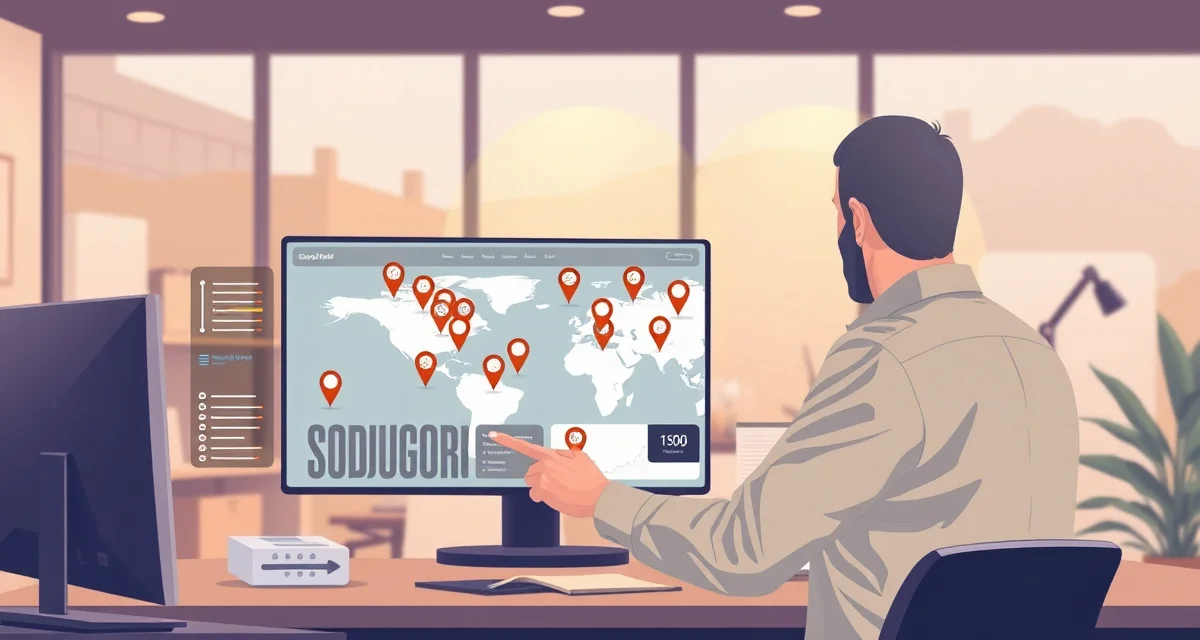
- Reporting and analytics (company-wide performance visible from one dashboard)
- User accounts (technicians and managers access based on their assigned location or role)
This structure lets each location operate with appropriate local configuration while giving company leadership visibility across the entire operation.
Reporting by Location and Company-Wide
Does SepticMind support separate reporting by location while maintaining a company-wide view? Yes. The reporting module can generate reports filtered by location, by date range, by service type, or company-wide.
Reports that multi-location companies find most useful:
- Revenue by location (which market is performing and growing?)
- Jobs per truck per day by location (where is efficiency lagging?)
- Permit compliance rate by location (which location has open compliance items?)
- Customer growth rate by location (where is the customer base expanding?)
- Average ticket value by location (are pricing structures aligned?)
Company-wide visibility lets leadership identify when one location is outperforming another and understand why. It also flags when one location's compliance metrics are trending in the wrong direction before a regulatory issue develops.
Practical Considerations for Multi-Location Setup
When you add a new location to SepticMind:
- Configure the new location's compliance templates for its state and counties
- Define the service area boundaries for that location
- Add technicians and set their location assignment
- Import any existing customers from that market into the shared database
- Configure the location's default scheduling and dispatch parameters
Existing customers from a market you're entering through acquisition or expansion can be imported via CSV. If the acquired company has records in another format, the migration process works with standard data exports.
The data migration guide for switching to SepticMind covers the import process in detail.
Get Started with SepticMind
Running a profitable septic business means managing compliance, customer relationships, and field operations without letting any of them slip. SepticMind handles the operational and compliance infrastructure so you can focus on growing the business. See what the platform can do for your operation.
Frequently Asked Questions
How do I manage permits and compliance for my company across different states?
Use a platform with location-aware job creation, where the permit requirements and compliance templates load automatically based on the job address. In SepticMind, every job created at a specific address loads the county and state-specific compliance requirements for that location without manual lookup. Each location can have its own state compliance configuration while all locations share the same customer database, service history, and reporting infrastructure.
Can different locations in SepticMind use different state compliance templates?
Yes. Each location is configured with the compliance templates appropriate for its state and service counties. A company with a Massachusetts location and a Connecticut location uses Title 5 templates for the Massachusetts location and Connecticut DPH frameworks for the Connecticut location. All other company-wide features, including customer records, service history, and performance reporting, are shared and unified regardless of the compliance differences between locations.
Does SepticMind support separate reporting by location while maintaining a company-wide view?
Yes. The reporting module supports filtering by location, service type, date range, or technician, and can generate company-wide aggregated reports across all locations simultaneously. Multi-location company leadership can view company-wide revenue, job volume, compliance status, and customer metrics from one dashboard, while also drilling down into location-specific performance when needed. This unified reporting is what makes company-wide operational decisions possible without manually compiling data from separate systems.
What metrics matter most for managing a septic service business?
The most important operational metrics for a septic service company are route utilization rate (percentage of available truck capacity actually booked), customer retention rate (percentage of customers who return for the next service visit), revenue per truck per day, cost per job including labor, disposal, fuel, and overhead allocation, and recurring revenue percentage from service agreements versus one-time calls. Companies that track these metrics by route and by technician identify improvement opportunities faster than those looking only at total revenue.
How does field service software reduce administrative costs for septic companies?
Field service software eliminates manual steps in scheduling, dispatching, invoicing, permit tracking, and inspection report preparation. Tasks that take an office manager 2-4 hours per day on spreadsheets and phone calls are handled automatically: reminders go out, reports generate, invoices are sent, and permit deadlines are flagged without human intervention. The hours saved are redeployed to customer service, sales, and higher-value work that grows the business.
Try These Free Tools
Sources
- National Onsite Wastewater Recycling Association (NOWRA)
- US EPA Office of Wastewater Management
- National Environmental Services Center (NESC)
- Water Environment Federation
- Occupational Safety and Health Administration (OSHA)