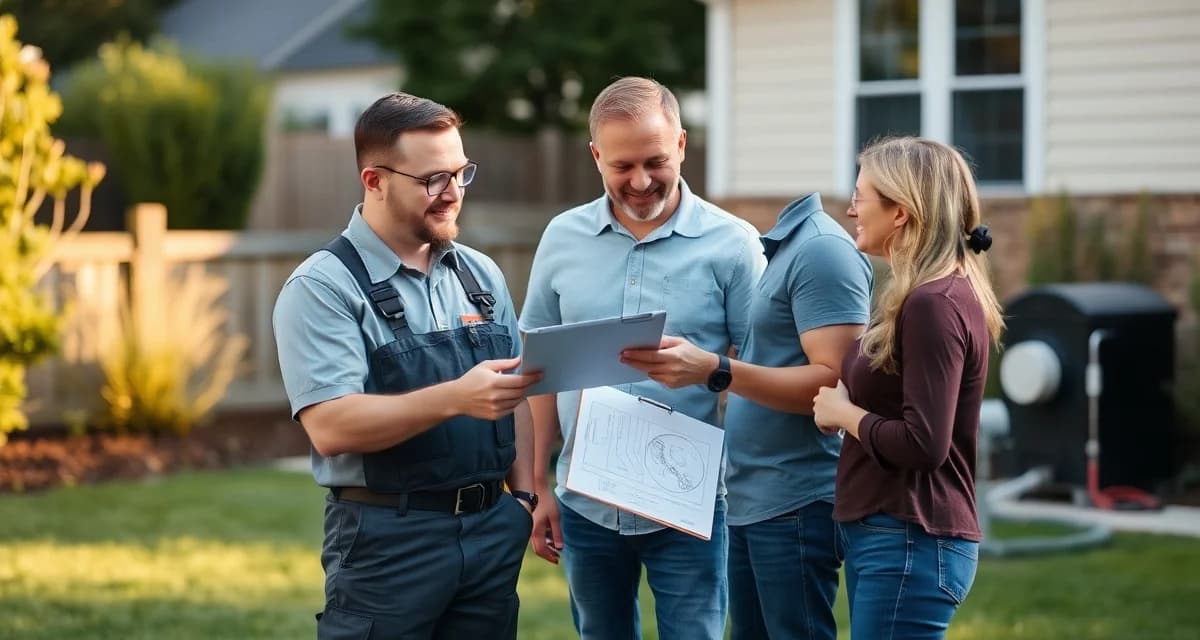
Septic Customer Communication Guide: Clear Communication at Every Stage
By the SepticMind Editorial Team
Most homeowners know very little about their septic system. They know it is underground, they hope it works, and they prefer not to think about it. Your technician's ability to explain what they found, what it means, and what should happen next in plain language is one of the most direct drivers of customer trust, repeat business, and referrals.
Poor communication costs money. A technician who says "your outlet baffle is deteriorating" and walks away leaves a homeowner confused and slightly alarmed. A technician who says "your outlet baffle is starting to wear out, which is normal after 15 to 20 years. We can replace it today while we are already here for $150, and that protects your drainfield from damage later" gives the homeowner information and a clear choice. The second approach generates more same-day approvals, better reviews, and more referrals.
Communicating During a Service Visit
The service visit is your highest-quality communication touchpoint. The homeowner is present, the tank is open, and your technician has direct evidence to reference. This is not the time for vague generalities.
Opening the conversation: a technician who introduces themselves by name, confirms the scope of the visit, and explains what they will report at the end sets a professional tone that reduces customer anxiety. Many homeowners are nervous because they associate septic service with potential large expenses.
If something significant is found, communicate it before packing up and leaving. Discovering a problem in a written report two days later, without prior conversation, feels like a surprise attack and damages the customer relationship. Walk the homeowner through the finding while you can still show them what you are describing.
A practical explanation structure for field findings: state what you observed (specific and factual), explain what it means for the system in plain terms, report any action taken during this visit, and give a clear recommendation for follow-up. That structure covers all the information the homeowner needs without requiring technical vocabulary.
When presenting a repair or additional service, state the price before asking for approval. Homeowners who are not told the cost until after they say yes feel manipulated. Upfront pricing builds trust and, counterintuitively, generates more approvals than surprise pricing.
Delivering Findings About Serious System Problems
A failing drainfield, a cracked tank, or a saturated distribution area is news the homeowner does not want to receive. How you frame it determines whether they trust your diagnosis and remain your customer.
A four-part structure for delivering serious findings:
First, describe what you found in factual terms. "Your drainfield is saturated in the southeast section. The soil is not absorbing effluent at the rate it should."
Second, explain what it means in plain language. "That section of the drainfield has reached the end of its absorption capacity. Over time, effluent will back up toward the house rather than dispersing into the soil."
Third, present options with pricing when options exist. "You have two paths here. A drainfield repair on that section typically runs $3,000 to $5,000 depending on what the soil assessment reveals. The second option is resting that section by temporarily redirecting flow, which works for some systems and buys time. I would want to do a proper soil evaluation before I could tell you whether option two is viable for your site."
Fourth, explain what happens if the customer defers action, honestly but without exaggeration. "If the system continues at current usage rates, you are likely to see sewage backing up into the house within 6 to 18 months. That creates a health concern and typically involves emergency service costs on top of the repair itself."
This structure respects the homeowner's ability to make informed decisions and positions your company as an advisor rather than someone pushing unnecessary work.
Service Reminder Timing and Messaging
Automated service reminders are only effective when they arrive at the right moment and deliver the right message.
The 30-day pre-interval reminder has the highest scheduling conversion rate. The homeowner is not yet past due, the reminder feels helpful rather than nagging, and there is enough lead time to schedule without urgency. If no appointment is booked, a second reminder at the interval date uses more direct framing: "your system is due now" outperforms "your system is almost due." A third reminder for accounts 30 or more days overdue uses honest information about what deferred service does to system longevity.
SMS reminders for service businesses have open rates above 95% compared to 20 to 25% for email. Keep SMS reminders short: one sentence stating when service is due, one clear action for the customer (reply, call, or click), and nothing else. Email reminders can carry more detail and work well for customers who prefer that channel or for communicating findings that require explanation.
SepticMind sends these reminder sequences automatically based on the next service date in the customer record, without requiring manual staff follow-up for each account in your database.
Writing Inspection Reports Customers Can Use
Many septic inspection reports are written for the technician, not the customer. They use technical abbreviations, assume component knowledge, and present findings in a format that the average homeowner cannot interpret without a follow-up call. This creates unnecessary customer service load and reduces confidence in your company's professionalism.
Standards for readable inspection reports:
Include photos for every significant finding. A photo of a cracked baffle, a clogged effluent filter, or a saturated area communicates immediately what 200 words of description cannot.
Write findings in plain language alongside any technical terminology. "Outlet baffle showing significant deterioration" should be accompanied by a one-sentence explanation of what the outlet baffle does and what this finding means for the system.
Use consistent recommendation categories that homeowners can act on: Required Action for safety or compliance issues needing immediate attention, Recommended for items not urgent but warranting attention at the next service, and Monitor for conditions to observe but not yet address.
Include the recommended next service date visibly in the report. Every customer who reads your report should leave knowing when their next service should be scheduled without having to ask.
SepticMind generates inspection reports with photo documentation, standardized finding categories, and next service dates from the data entered during the field visit. Reports delivered within 24 hours of the inspection, which SepticMind makes straightforward because the data is captured in the field, set a professional standard that customers and real estate agents notice and reference when recommending service providers.
Review your customer retention strategies alongside your communication practices. Clear field communication and prompt, readable report delivery are the two most direct drivers of the kind of customer experience that generates referrals and long-term maintenance relationships.
Try These Free Tools
Sources
- Environmental Protection Agency
- National Association of Wastewater Technicians
- Water Quality Association
- National Onsite Wastewater Recycling Association